Should You Avoid AI to Improve Your Coding Skills?
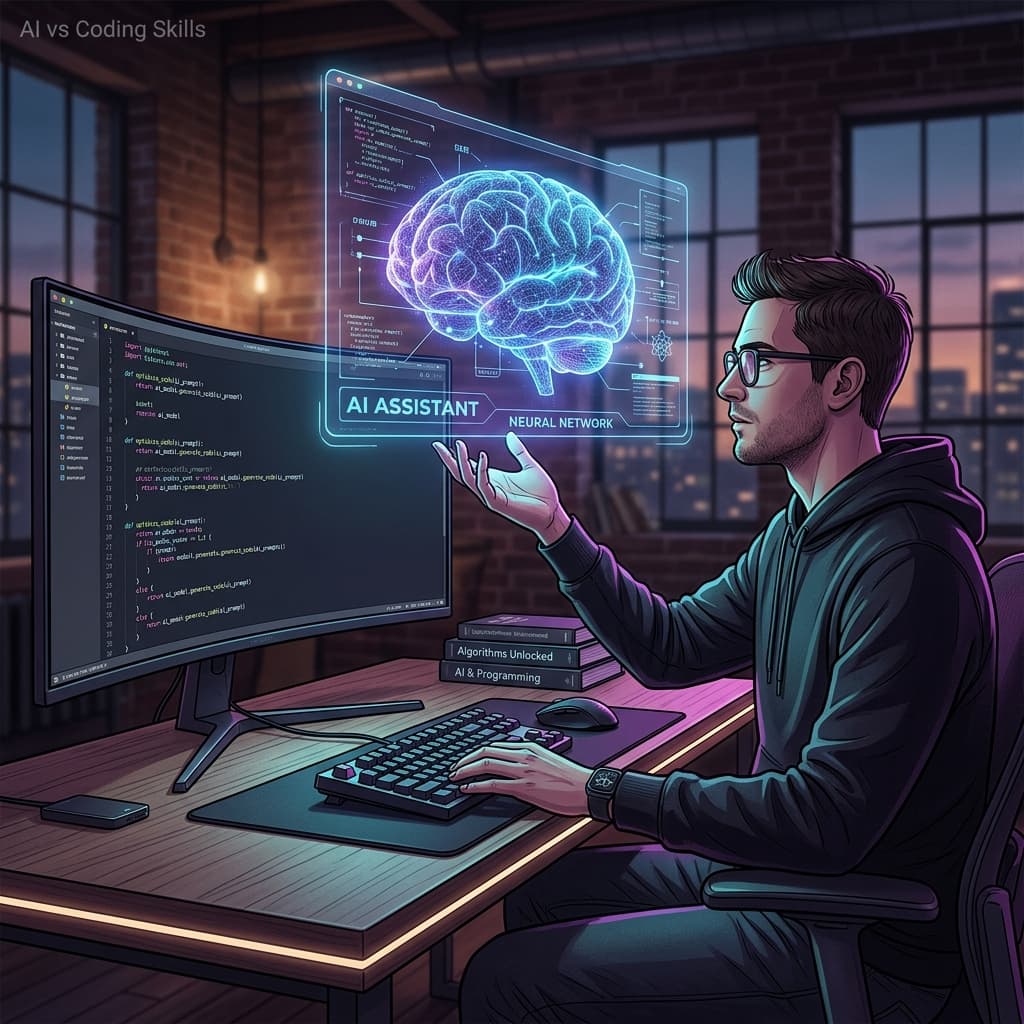
There’s a growing anxiety among developers: “Am I hurting my skills by using AI too much?” It’s a fair question—and the answer isn’t as simple as “yes” or “no.”
Let’s be clear: avoiding AI completely is a mistake. But relying on it blindly is an even bigger one. The real challenge isn’t whether to use AI—it’s how you use it.
The Trap Most Developers Fall Into
AI makes things fast. Almost too fast. You hit a bug → paste it → get a fix → move on.
It feels productive. But underneath, something dangerous is happening:
- You skip the thinking process
- You avoid debugging
- You never build a mental model
Over time, this leads to a harsh reality: You can build things… but you don’t fully understand them.
What Actually Builds Skill
Skill in programming doesn’t come from reading solutions. It comes from:
- Struggling with problems
- Making wrong assumptions
- Debugging your own mistakes
- Slowly refining your mental model
That uncomfortable phase—where things don’t work—is not a problem. It’s the entire point. AI becomes harmful when it removes that phase completely.
The Right Way to Use AI
You don’t need to avoid AI. You need to change your relationship with it.
1. Try Before You Ask
Give yourself a time window—15 to 30 minutes. Even if you fail, your brain builds context. That context is what turns explanations into real understanding.
2. Ask Like an Engineer
Instead of: “Fix this code” Ask: “I think the issue is caused by X because of Y. Am I missing something?” Now you’re thinking—and AI is just refining your reasoning.
3. Never Copy Without Processing
If you paste code and move on, you’ve learned nothing. Instead:
- Rewrite it in your own way
- Change variable names
- Break it and fix it again If you can’t manipulate it, you don’t understand it.
4. Rebuild Without Help
This is where most people fail. After solving a problem, come back later and:
- Reimplement it from scratch
- Without AI
- Without references If you succeed, the knowledge is yours. If you fail, you’ve identified a real gap.
5. Use AI for Leverage, Not Replacement
Good uses:
- Understanding concepts deeply
- Exploring trade-offs
- Reviewing architecture
- Finding edge cases
Bad uses:
- Solving every small bug
- Writing entire features blindly
- Acting as your primary debugger
The Hard Truth
Senior engineers don’t avoid tools. They just don’t let tools think for them. The difference isn’t access to AI—it’s discipline in using it.
A Simple Rule to Remember
If you can't explain or rebuild what you just used, you didn't learn it.
Final Thoughts
AI is not the enemy of skill. Mindless usage is.
Use AI. Learn from it. Challenge it. But don’t outsource your thinking. Because at the end of the day, your value as a developer isn’t in how fast you get answers—it’s in how deeply you understand the problems.
And no tool can replace that.